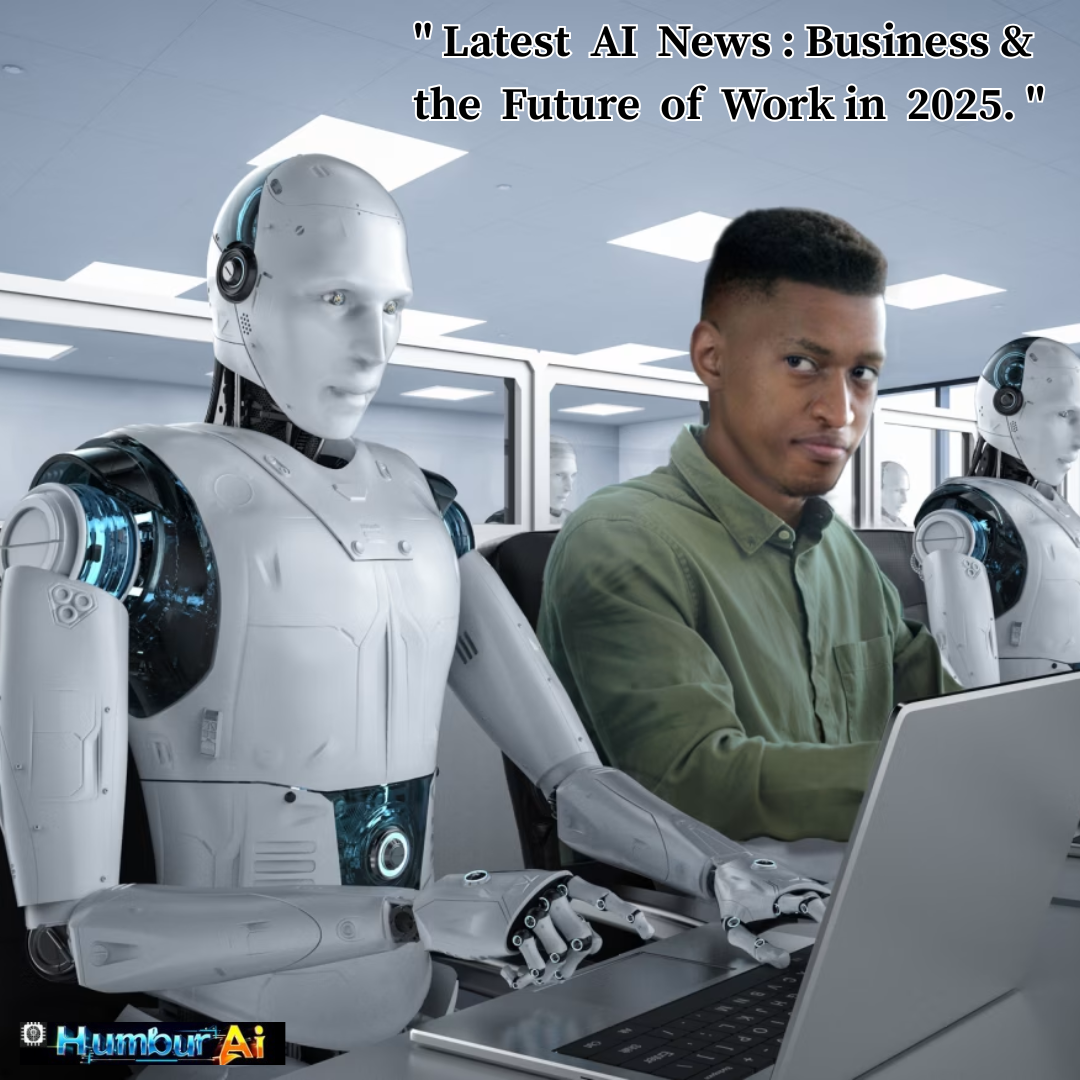
Latest AI News Business Future of Work 2025.
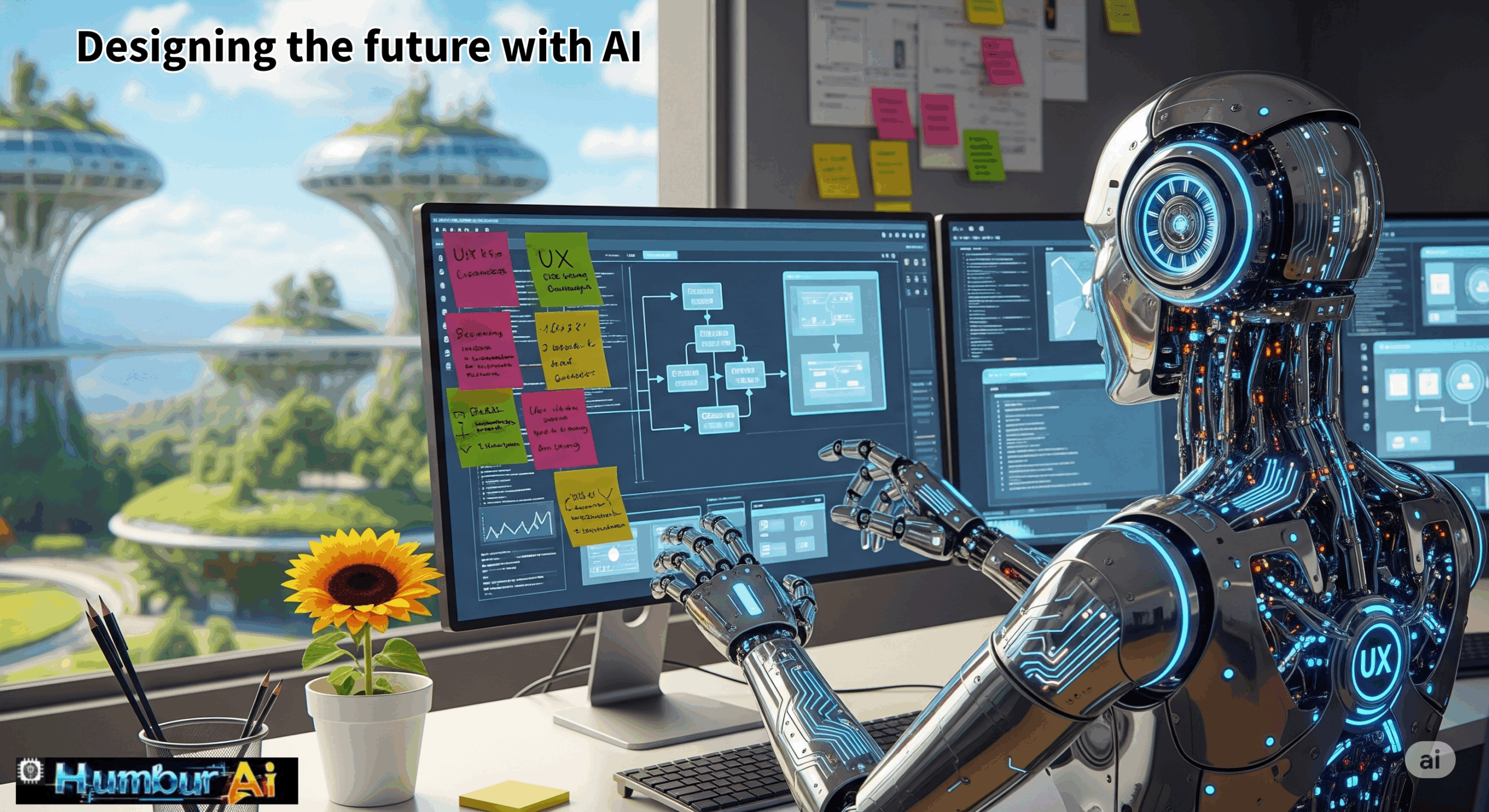
The year 2025 marks a transformative era in the world of artificial intelligence, where groundbreaking innovations are rapidly reshaping the landscape of business and the future of work. From AI driven automation streamlining operations to intelligent algorithms redefining decision making, companies across industries are embracing this technological evolution to gain a competitive edge. As the boundaries between human capability and machine intelligence blur, the global workforce is undergoing a profound shift demanding new skills, adapting to hybrid roles, and rethinking traditional job structures.
The most recent AI news and how it is advancing the business ecosystem and reshaping the future of work in 2025 are examined in this introduction. The technology landscape was shaped by breakthroughs, releases, and discussions during the month of May 2025, which marked a significant period for advancements in artificial intelligence (AI). From new model releases to innovative applications across industries, the AI ecosystem continued to evolve at an unprecedented pace. This article explores the most notable AI developments reported in May 2025, drawing from trending discussions and posts on X, while critically examining their implications.
Major Model Releases and Updates.
Google’s Gemini 2.5 Pro : A Leap in Coding and Development.
Google made headlines at its I/O 2025 conference with the release of Gemini 2.5 Pro, a model tailored for advanced coding and web development. This update enhances its predecessors’ capabilities, offering improved performance in generating complex codebases and streamlining web development workflows. Developers on X praised its ability to handle intricate tasks, such as real-time debugging and multi language support, making it a go to for professionals in software engineering. In addition, Google added real time voice translation to Google Meet, a Gemini 2.5 Pro powered feature that promises to instantly eliminate language barriers in virtual communication.
However, some skepticism persists. Critics on X noted that while Gemini 2.5 Pro excels in coding, its multimodal capabilities handling text, images, and video still lag behind competitors like Claude 3 to 7 Sonnet in specific writing tasks. This suggests that while Google is pushing boundaries, the race for a truly all encompassing AI model remains competitive.

Claude 3 to 7 Sonnet and Mistral Medium 3.
In the writing and coding domains, Anthropic’s Claude 3 to 7 Sonnet emerged as a strong contender thanks to its ability to generate nuanced text and handle complex programming tasks. Posts on X highlighted its edge in producing coherent, contextually accurate content, making it a favorite for creative writers and developers alike. Meanwhile, Mistral’s Medium 3 model also garnered attention for its efficiency in natural language processing, though it received less fanfare compared to Claude and Gemini. These releases underscore the ongoing competition among AI providers to deliver specialized models catering to niche use cases.
Multimodal AI and Creative Applications.
HeyGen’s Avatar IV and Lightricks’ Open Source AI Video .
HeyGen’s Avatar IV model, which enhances the realism of AI generated avatars for the production of video content, led to significant advancements in the creative AI field. This model enables businesses and content creators to produce high quality, lifelike videos with minimal effort, a development celebrated on X for its potential in marketing and entertainment. Similarly, Lightricks released an open source AI video model, democratizing access to advanced video generation tools.
Because developers can now customize and integrate the model into a variety of platforms, this move was praised for encouraging innovation. However, concerns were raised about the ethical implications of such technologies. Discussions on X highlighted fears of deepfake misuse, with users calling for robust safeguards to prevent malicious applications. These advancements, while exciting, underscore the need for responsible AI deployment.
Topic Table: Latest AI News, Business & Future of Work 2025
| Section | Subtopics | Details | Tags |
|---|---|---|---|
| 1. Introduction | AI in 2025 A Game Changer | Overview of how AI is transforming industries and redefining work culture | AI 2025 Future
Of Work |
| 2. Latest AI Innovations | Generative AI, Autonomous Agents, AI Avatars | The newest tools and technologies making headlines in 2025 | AI Breakthroughs
Generative AI |
| 3. Business Transformation Through AI | Smart automation, AI enhanced decision making, predictive analytics | How companies are leveraging AI to cut costs, scale faster, and make better decisions | Business AI
Automation |
| 4. AI & Workforce Evolution | Reskilling, hybrid roles, human-AI collaboration | The shift in required job skills and the rise of AI-assisted professions | Jobs Of The Future
AI Work force |
| 5. Ethical and Legal Challenges | Data privacy, algorithmic bias, labor laws | Navigating the legal and moral implications of AI integration | AI Ethics
Tech Policy |
| 6. Industry Spotlights | Healthcare, Finance, Education, Retail | Sector-wise impacts of AI in real world applications | AI in Business
AI Industries |
| 7. AI Startups & Investment Trends | Funding trends, notable AI startups in 2025 | Venture capital interest and global investment shifts | AI Startups
Tech Investments |
| 8. Remote Work & AI Tools | Virtual assistants, AI driven project management tools | How AI is enhancing productivity and collaboration in remote/hybrid workspaces | Remote Work
AI Tools |
| 9. Government & AI Policy | Regulations, global AI strategies, digital workforce programs | How nations are preparing their economies for an AI-dominated future | AI Regulation
Digital Policy |
| 10. Future Outlook | Predictions for 2030 and beyond | What the next phase of AI might look like in work and business | AI Trends
Future Forecast |
Figma’s AI Powered Design Tools.
Figma introduced powerful AI features to its design platform, enabling automated layout suggestions, color palette generation, and real-time collaboration enhancements. Designers on X expressed enthusiasm for how these tools streamline workflows, reducing the time spent on repetitive tasks. This use of AI in creative software is indicative of a broader trend: AI is now more than just a backend technology; it is an essential part of applications that are used by users.
AI in Research: Breakthroughs and Papers.
May 2025 was a prolific month for AI research, with several groundbreaking papers shared on X. New methodologies and their implications for future development dominated the AI research community.
Self Generated Training Data: A Paradigm Shift.
A team at Tsinghua University published a paper claiming that an AI model surpassed the performance of those trained on human-curated data by generating its own training data. This breakthrough, described as potentially “the most significant paper of 2025,” could eliminate data scarcity bottlenecks, paving the way for more autonomous AI systems. However, there is still skepticism because some researchers on X questioned the approach’s scalability and generalizability, citing the requirement for additional validation.
Notable Research Papers.
Other influential papers included:
Claude 4 System Card: Detailing Anthropic’s latest safety and performance metrics.
Qwen 3 Technical Report: Exploring advancements in efficient language model training.
BLIP 3 to o and Seed1.5 VL: Focusing on vision-language models with improved multimodal understanding.
Parallel Scaling Law for LMs: Proposing new approaches to scale large language models efficiently.
These papers, shared widely on X, reflect the academic community’s focus on improving model efficiency, safety, and multimodal capabilities.

Industry Acquisitions and Strategic Moves.
In May 2025, there was a lot of business activity in the AI industry. Open AI’s acquisition of Windsurf, a company specializing in AI driven automation, sparked discussions about consolidation in the AI market. This move is seen as Open AI’s attempt to bolster its enterprise focused offerings, though some X users expressed concerns about reduced competition and innovation in the sector. Nvidia also made waves with a top performing transcription AI, further solidifying its dominance in AI hardware and software integration.

Ethical and Societal Implications.
The rapid pace of AI advancements in May 2025 reignited debates about ethics and regulation. Posts on X highlighted concerns about job displacement due to AI automation, particularly in creative industries like video production and design. Additionally, the accessibility of powerful AI tools, such as Lightricks’ open source video model, raised questions about equitable access and the potential for misuse in generating misleading content. These discussions underscore the need for balanced policies that foster innovation while addressing societal impacts.

AI in Entertainment and Gaming.
While not directly AI focused, trends on X in May 2025 showed how AI is influencing entertainment. The release of Blood Line: A Rebel Moon Game on Netflix, leveraging AI for dynamic gameplay experiences, reflects the growing integration of AI in gaming. Similarly, the resurgence of Monsters vs. Aliens through AI generated viral content like GIFs illustrates how AI tools amplify cultural trends. These examples highlight AI’s role in enhancing interactive and visual storytelling.

The Road Ahead.
The AI developments of May 2025 signal a future where AI is deeply embedded in daily life, from coding and design to entertainment and communication. However, they also raise critical questions about ethics, accessibility, and regulation. The AI community must strike a balance between innovation and responsibility as groundbreaking research challenges conventional data paradigms and models like Gemini 2.5 Pro and Claude 3 to 7 Sonnet push technical boundaries.
Users on X are expressing both excitement and caution, praising AI’s potential to transform industries and urging safeguards against misuse. As we move forward, the focus will likely shift toward ensuring that AI’s benefits are equitably distributed and its risks carefully managed.


You May Also Like

The Gift of the Magi

Artificial Intelligence in E Commerce